TMT Bar Price Today: What Factors Affect TMT Steel Prices?
If you are planning a house, commercial building or infrastructure project, one of the first questions you may have is: What is the TMT bar price today?
TMT steel prices do not remain fixed. They can change depending on raw material costs, market demand, supply conditions, international steel prices, transportation expenses, taxes, location and the diameter or grade of the TMT bar.
According to India’s Ministry of Steel, domestic steel prices are influenced by raw material prices, demand and supply conditions and international price trends.
As a recent market reference, the Ministry of Steel reported that the average price of 10mm TMT increased from ₹58,002 per tonne in August 2026 to ₹65,298 per tonne in September 2026.
This is why buyers should check the latest regional price rather than relying on an old TMT bar rate.
What Determines TMT Bar Prices?
The price of TMT steel is influenced by several interconnected factors:
- Raw material costs
- Iron ore prices
- Coking coal and energy costs
- Steel demand and supply
- International steel prices
- Grade and strength
- Bar diameter
- Manufacturing costs
- Transportation and logistics
- Taxes and market conditions
- Location
- Dealer and distribution margins
Let’s look at each factor in detail.
1. Raw Material Prices
Raw materials are one of the most important factors affecting steel prices.
Changes in the cost of iron ore, coal, scrap and other steelmaking inputs can increase or decrease the cost of producing TMT bars.
When input costs rise, manufacturers may face higher production costs, which can eventually affect the market price of finished steel.
2. Iron Ore Prices
Iron ore is a key raw material for steel production.
When iron ore prices increase, the cost of producing steel can also rise. Conversely, a decline in iron ore prices can reduce pressure on production costs.
However, TMT prices do not move directly with iron ore prices every day because several other factors influence the final market price.
3. Coking Coal and Energy Costs
Energy and fuel costs also affect steel manufacturing.
Coking coal is particularly important for steelmaking. India relies heavily on imported coking coal, making international supply and pricing conditions relevant to domestic steel production costs.
Recent market reporting has also linked higher coking coal costs with increases in Indian steel prices.
Electricity, fuel and other manufacturing costs can also influence the final price of TMT bars.
4. Demand and Supply
The basic market relationship between demand and supply is another major price driver.
When construction and infrastructure activity increases, demand for reinforcement steel can rise.
Higher demand from sectors such as:
- Residential construction
- Commercial construction
- Roads
- Bridges
- Railways
- Metro projects
- Industrial projects
- Government infrastructure
can influence steel prices.
On the other hand, weaker demand or excess supply can put downward pressure on prices.
5. International Steel Prices
Indian steel prices are also influenced by international steel market conditions.
Global changes in:
- Steel prices
- Iron ore prices
- Coking coal prices
- Freight rates
- Currency movements
- Export and import activity
- Trade policies
can affect the domestic steel market.
The Ministry of Steel specifically identifies international price trends as one of the factors influencing domestic steel prices.
6. Grade of TMT Bar
TMT bars are available in different grades, and grade selection can affect the product specification and price.
Common grades include:
- Fe500
- Fe500D
- Fe550
- Fe600
The appropriate grade should be selected according to the structural design rather than simply choosing the highest-strength grade.
Mongia Steel currently manufactures Fe600 TMT rebars in sizes from 8mm to 32mm. Its published technical information includes mechanical properties, chemical properties and weight-tolerance information.
For detailed specifications, buyers can refer to the Mongia Steel TMT Rebars page.
7. TMT Bar Diameter
TMT bar prices can also vary according to diameter and the way the product is sold.
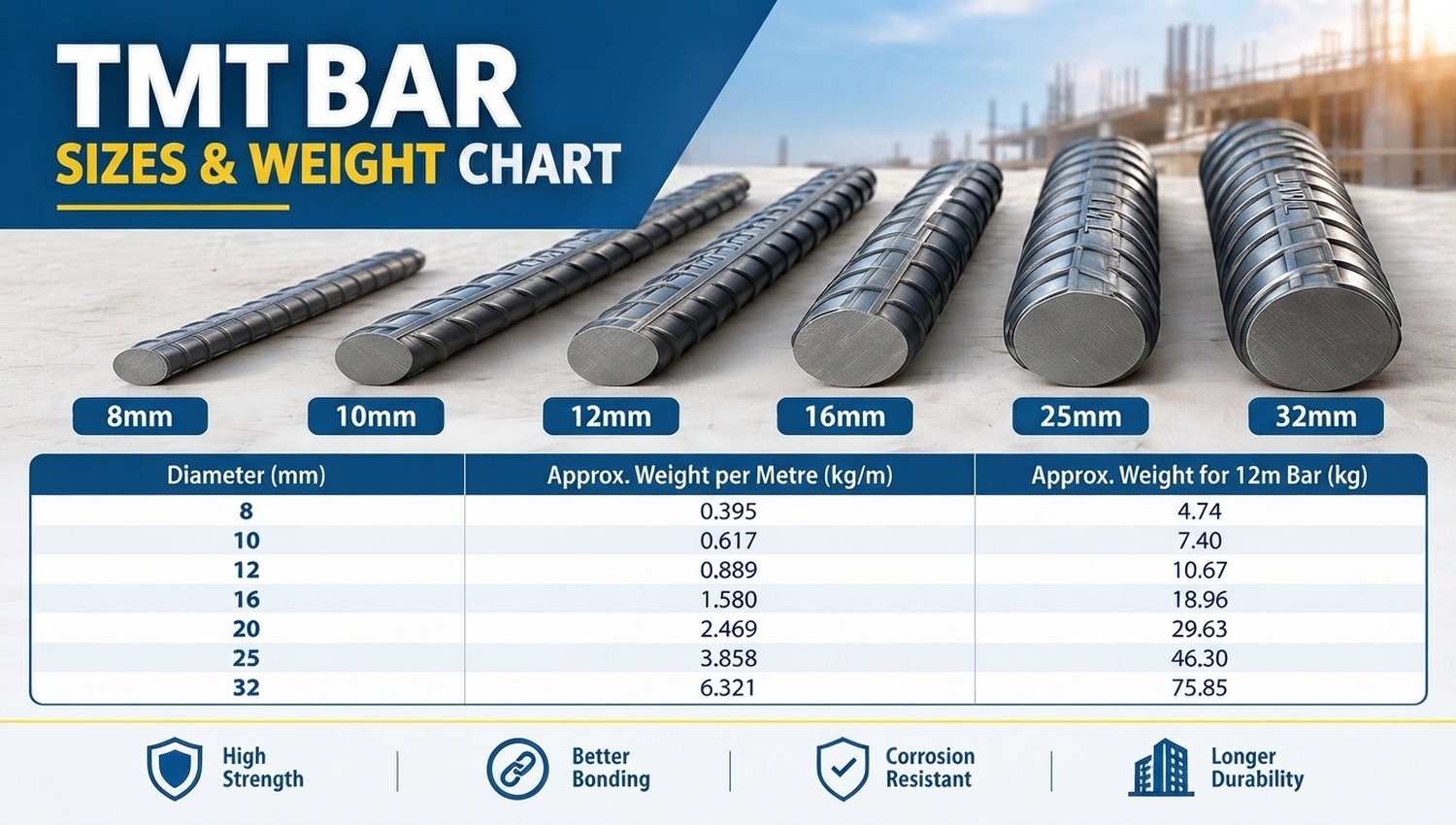
Common diameters include:
- 8mm
- 10mm
- 12mm
- 16mm
- 20mm
- 25mm
- 32mm
The quantity of steel required for a project depends on the structural design, while the total purchase cost depends on the quantity, applicable rate and other commercial factors.
For example:
Total TMT Cost = Required Quantity × Applicable TMT Rate
Therefore, buyers should compare prices for the specific diameter required in their project.
8. Manufacturing and Processing Costs
The manufacturing process also contributes to the final price of TMT steel.
Costs can include:
- Steel melting
- Billet production
- Rolling
- Heat treatment
- Quality testing
- Labour
- Energy
- Maintenance
- Packaging
- Handling
Mongia Steel states that its TMT production uses an automated hot rolling mill and that its TMT bars are available in sizes from 8mm to 32mm.
9. Transportation and Logistics
TMT bars are heavy products, so transportation can have a meaningful impact on the delivered price.
The final price paid by a buyer may vary depending on:
- Distance from the manufacturing facility
- Freight costs
- Fuel prices
- Delivery quantity
- Road conditions
- Local distribution network
- Delivery location
This is one reason why TMT bar prices can differ between cities and regions even when the underlying steel product is similar.
10. Taxes and Other Charges
The final amount paid by a buyer can include applicable taxes and commercial charges.
When comparing quotations, check whether the quoted TMT bar rate includes or excludes:
- GST
- Transportation
- Loading and unloading
- Dealer margins
- Other applicable charges
A lower quoted base price does not necessarily mean a lower final delivered cost.
11. Location and Regional Market Conditions
TMT bar prices can vary by region because of differences in transportation, distribution, demand and local market conditions.
Mongia Steel publishes consumer price information for markets including:
- Jharkhand
- Bihar
- Uttar Pradesh
- Odisha
- Jammu
Its consumer price page provides prices by bar size and region.
You can check the current TMT bar prices for the latest published regional pricing information.
12. Market Competition and Distribution
The final price can also be influenced by competition among manufacturers, distributors and dealers.
Factors such as order size, availability, delivery requirements and local competition can affect the commercial quotation offered to a buyer.
For large construction projects, it is useful to compare quotations based on the same grade, diameter, quantity, tax treatment and delivery terms.
TMT Bar Price Per Kg vs Price Per Piece
TMT bars may be quoted using different pricing methods.
A supplier may provide:
- Price per kg
- Price per tonne
- Price per piece
- Delivered price
- Ex-works price
When comparing two quotations, make sure the pricing basis is the same.
For example, comparing a price per piece from one supplier with a price per kg from another can be misleading unless the bar diameter and theoretical or actual weight are also considered.
How Is TMT Bar Price Calculated?
A simple calculation is:
Total TMT Cost = Total Steel Quantity × TMT Rate
For example, if you need 5,000 kg of TMT steel and the applicable rate is ₹60/kg:
5,000 × ₹60 = ₹3,00,000
The final invoice can differ depending on applicable taxes, transportation and other commercial charges.
Why Does TMT Bar Price Change Frequently?
TMT prices can change because steel is a market-linked commodity.
Price movements can occur when there are changes in:
- Raw material prices
- Steel demand
- Steel production
- Imports and exports
- International steel prices
- Coking coal prices
- Energy costs
- Freight rates
- Government policies
- Construction activity
- Seasonal demand
For example, India’s Ministry of Steel reported a 12.6% month-on-month increase in the average 10mm TMT price between August and September 2026.
Therefore, an online price published weeks or months earlier may not represent the current market rate.
How to Check the TMT Bar Price Today
Before purchasing TMT bars, follow these steps:
- Identify the required TMT grade.
- Confirm the required bar diameters.
- Determine the required quantity from the structural drawings/BBS.
- Check the current regional TMT price.
- Confirm whether GST and transportation are included.
- Compare quotations from reliable suppliers.
- Verify the manufacturer’s specifications and test documentation.
- Confirm delivery terms and availability.
For Mongia Steel buyers, the Consumer Price page provides published prices for different regions and bar sizes.
Should You Buy TMT Bars Only Based on Price?
No.
The lowest price is not necessarily the best option for a construction project.
When comparing TMT bars, consider:
- Grade
- Applicable standards
- Yield strength
- Tensile strength
- Ductility
- Bendability
- Weight tolerance
- Quality testing
- Manufacturer reputation
- Product availability
- Delivery terms
- Total landed cost
Mongia Steel’s published TMT information provides technical data for its Fe600 rebars, including yield strength, tensile strength, elongation and weight tolerance.
What Is the Best Way to Compare TMT Bar Prices?
Use the following comparison checklist:
| Factor | What to Compare |
| Grade | Fe500D / Fe550 / Fe600 as specified |
| Diameter | Same diameter across quotations |
| Quantity | Same total requirement |
| Price basis | Per kg / tonne / piece |
| GST | Included or excluded |
| Transportation | Included or additional |
| Quality | Applicable standards and testing |
| Weight | Theoretical/actual weight and tolerance |
| Availability | Immediate or scheduled delivery |
| Supplier | Manufacturer/authorized dealer |
This gives a more accurate comparison than looking at the quoted rate alone.
Frequently Asked Questions
What is the TMT bar price today?
TMT bar prices vary by grade, diameter, location, supplier and market conditions. Buyers should check the latest regional price rather than relying on an old price.
Mongia Steel publishes consumer prices for several regions on its website.
Why does TMT bar price change?
TMT bar prices can change because of fluctuations in raw material costs, steel demand and supply, international steel prices, energy costs, transportation, taxes and market conditions.
What factors affect TMT steel prices in India?
Major factors include iron ore prices, coking coal and energy costs, domestic demand, supply, international steel prices, imports and exports, transportation costs, taxes and regional market conditions.
Does TMT bar price vary by size?
Yes. TMT bars are available in different diameters, and pricing can vary according to diameter, weight, grade, market conditions and the supplier’s pricing structure.
Does TMT bar price vary by location?
Yes. Transportation, regional demand, distribution costs and local market conditions can cause differences in TMT prices between locations.
Is Fe600 TMT more expensive than lower-grade TMT bars?
Price depends on the manufacturer, market conditions, grade, diameter and commercial terms. Fe600 has a higher specified minimum yield strength than Fe500D and Fe550, but the appropriate grade should be selected according to structural requirements.
How can I calculate the total cost of TMT steel?
Use:
Total TMT Cost = Required Steel Quantity × Applicable TMT Rate
Then add applicable taxes, transportation and other charges if they are not already included in the quoted rate.
Where can I check Mongia Steel TMT bar prices?
You can check the latest published regional pricing on the Mongia Steel Consumer Price page.
Where can I check Mongia Steel TMT specifications?
Detailed technical information about Mongia Steel’s Fe600 TMT rebars is available on the Mongia Steel TMT Rebars page.
What products does Mongia Steel manufacture?
Mongia Steel’s product range includes TMT rebars and steel billets, among other steel products. Its Mongia Steel Products page provides an overview of the company’s product range.