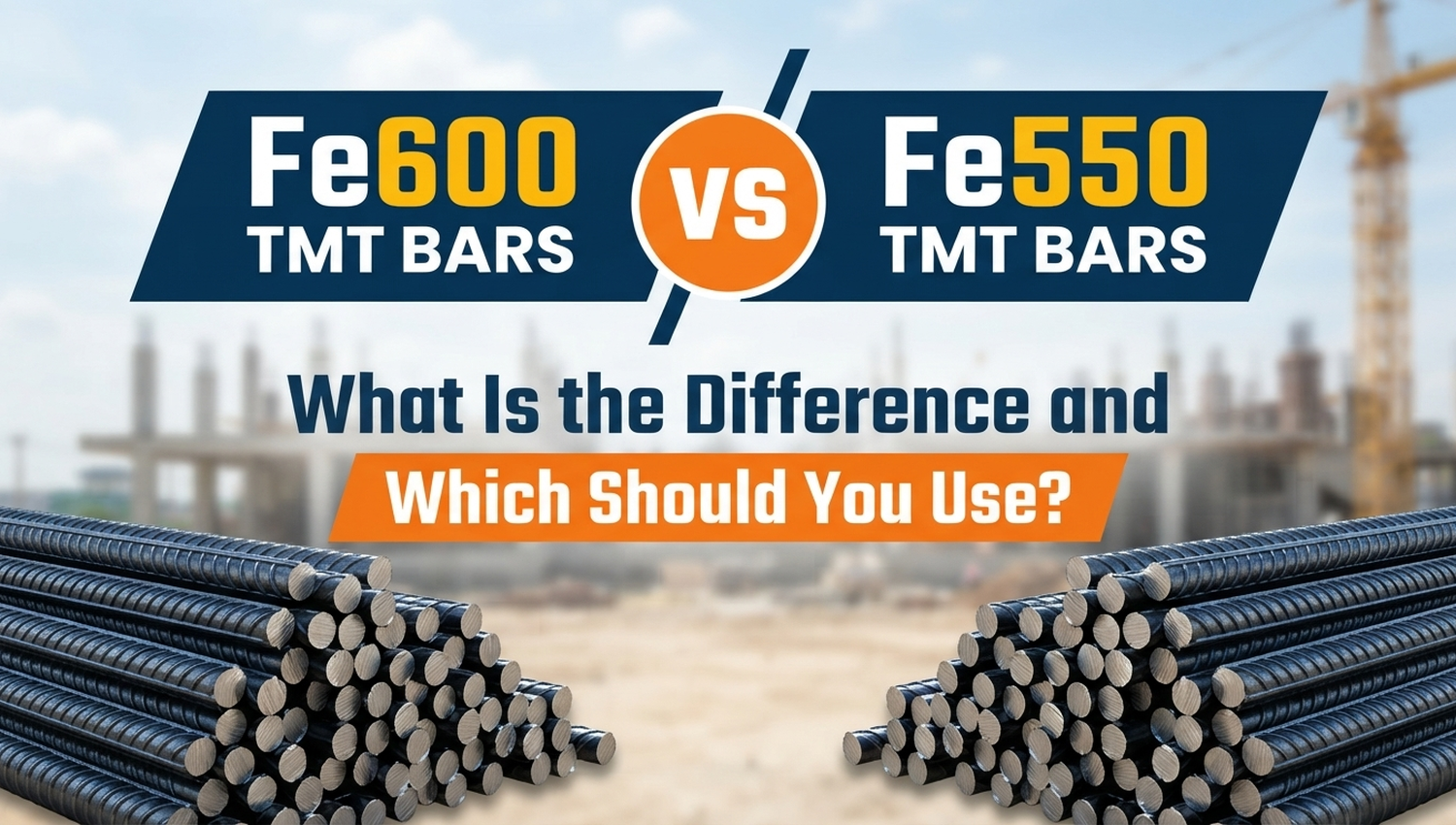
Fe600 vs Fe550 TMT Bars: What Is the Difference and Which Should You Use?
When choosing reinforcement steel, two commonly discussed high-strength grades are Fe550 and Fe600 TMT bars. Both provide higher specified yield strength than Fe500-grade reinforcement, but they have different mechanical properties and may be selected for different structural requirements.
The main difference is straightforward: Fe600 has a higher minimum yield strength than Fe550. Fe550 has a specified minimum yield strength of 550 N/mm², while Fe600 has a specified minimum yield strength of 600 N/mm².
However, choosing between them should not be based on strength alone. Structural design, ductility, bendability, applicable standards, availability and project requirements also matter.
Fe600 vs Fe550: Quick Comparison
| Feature | Fe550 | Fe600 |
| Minimum Yield Strength | 550 N/mm² | 600 N/mm² |
| Minimum Elongation | 10% | 10% |
| Minimum Tensile Strength | 585 N/mm² | 660 N/mm² |
| Strength Level | High | Higher |
| Typical Application | High-strength RCC applications | Higher-strength RCC applications |
Mongia Steel’s published TMT comparison chart provides the BIS mechanical-property requirements for Fe550 and Fe600 under IS 1786:2008, along with product-specific maximum test values.
For more information about Mongia Steel’s reinforcement products, see the Mongia Steel TMT Rebars page.
What Is Fe550 TMT Steel?
Fe550 is a high-strength TMT reinforcement grade with a specified minimum yield strength of 550 N/mm².
Compared with Fe500, Fe550 provides a higher specified yield strength and can be used where structural design calls for higher-strength reinforcement.
The applicable properties of a particular product should be verified through the manufacturer’s test certificate and the relevant IS specification.
What Is Fe600 TMT Steel?
Fe600 is a higher-strength TMT grade with a specified minimum yield strength of 600 N/mm².
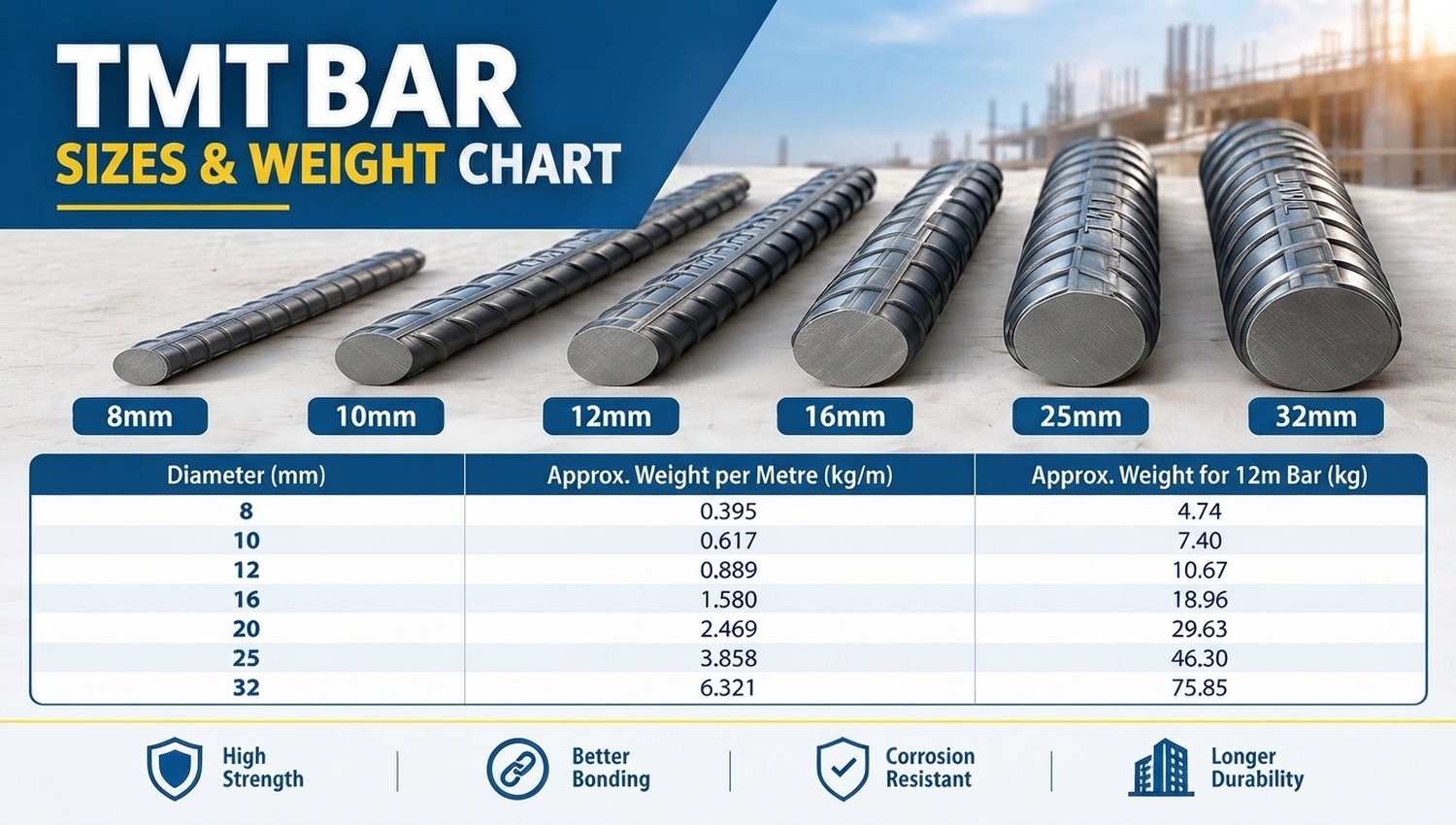
Mongia Steel currently manufactures Fe600 TMT rebars in sizes from 8mm to 32mm. Its published product information provides details about strength, ductility, bendability, weldability, bonding with concrete and weight tolerance.
You can also explore the complete range of Mongia Steel products for information about its TMT rebars and billets.
Key Difference Between Fe600 and Fe550
1. Yield Strength
This is the clearest technical difference.
Fe550 has a minimum specified yield strength of 550 N/mm², while Fe600 has a minimum specified yield strength of 600 N/mm².
Therefore:
- Fe550: 550 N/mm² minimum yield strength
- Fe600: 600 N/mm² minimum yield strength
The difference is 50 N/mm² in specified minimum yield strength.
Mongia Steel’s comparison data lists a maximum measured yield value of 570 N/mm² for its Fe550 and 624 N/mm² for its Fe600 product.
2. Tensile Strength
The specified minimum tensile strength is also higher for Fe600.
| Grade | Minimum Tensile Strength |
| Fe550 | 585 N/mm² |
| Fe600 | 660 N/mm² |
Mongia Steel’s published comparison data lists maximum ultimate tensile strength values of 662 N/mm² for its Fe550 and 715 N/mm² for its Fe600 product.
3. Steel Optimization
Higher-strength reinforcement can allow structural designers to optimize reinforcement quantities in suitable applications.
However, this does not mean that every building will automatically require less steel when using Fe600. Reinforcement quantities are determined through structural design calculations, member dimensions, loading conditions and applicable design requirements.
Any reduction or optimization of reinforcement should be based on the structural engineer’s calculations rather than simply changing from Fe550 to Fe600.
4. Ductility
Strength is only one factor when comparing reinforcement steel.
Ductility is also important because reinforcement must be capable of accommodating deformation under construction and structural loading conditions.
For this reason, buyers should look beyond the grade name and examine:
- Elongation
- Bendability
- Tensile strength
- Yield strength
- Chemical composition
- Applicable IS requirements
- Manufacturer test results
Mongia Steel’s comparison chart lists 10% minimum elongation for both Fe550 and Fe600 under its stated BIS comparison, while its product-specific maximum elongation values are 19% for Fe550 and 17% for Fe600.
5. Bendability
Bendability is another important property because TMT bars are commonly cut and bent according to structural drawings and bar bending schedules.
Mongia Steel publishes bend-property information for Fe550 and Fe600 in its TMT Rebars technical section.
When purchasing TMT bars, the applicable grade, diameter and bending requirements should be checked against the structural design.
6. Application
Both Fe550 and Fe600 can be used in demanding reinforced-concrete applications where the respective grade is specified.
Potential applications include:
- Residential buildings
- Multi-storey buildings
- Commercial buildings
- Industrial structures
- Foundations
- Columns
- Beams
- Infrastructure projects
The appropriate grade should be selected according to the structural engineer’s design and the requirements of the project.
Fe600 vs Fe550 for House Construction
For an individual house, the question should not simply be “Which grade is stronger?”
Instead, consider:
- Structural design
- Number of floors
- Soil conditions
- Seismic requirements
- Column and beam design
- Foundation requirements
- Required ductility
- Bar diameter
- Availability
- Project budget
- Applicable standards
For example, a structural engineer may specify different grades or diameters for foundations, columns, beams and slabs.
The correct TMT grade should therefore be determined from the structural drawings and engineering calculations.
If you are researching TMT options for residential construction, you can also explore Mongia Steel’s TMT Rebars page for its Fe600 product specifications and technical properties.
Is Fe600 Always Better Than Fe550?
Higher yield strength does not automatically make one grade suitable for every application.
The right TMT bar depends on what the structural design requires.
For projects designed specifically around higher-strength reinforcement, Fe600 may be specified. For other projects, Fe550 may meet the engineering requirements.
Therefore, the appropriate approach is to follow the structural design rather than selecting a grade based only on its numerical strength.
A structural engineer should determine the appropriate reinforcement grade, diameter and quantity for the building.
Fe600 vs Fe550: Which Has Higher Strength?
Fe600 has the higher specified yield strength.
- Fe550: 550 N/mm² minimum yield strength
- Fe600: 600 N/mm² minimum yield strength
The difference is 50 N/mm² in specified minimum yield strength.
Fe600 also has a higher specified minimum tensile strength:
- Fe550: 585 N/mm²
- Fe600: 660 N/mm²
These values describe the specified mechanical properties of the grades; actual product test results should be checked in the manufacturer’s test certificate. Mongia Steel publishes product-specific Fe550 and Fe600 test values on its TMT Rebars page.
Fe600 vs Fe550: Which Should You Use?
The appropriate grade depends on the structural requirements of the project.
Fe550 may be considered when:
- The structural design specifies Fe550.
- The required strength level is suitable for Fe550.
- The project design is based on Fe550 reinforcement.
- The required diameter and availability meet the project’s requirements.
Fe600 may be considered when:
- The structural design specifies Fe600.
- Higher-strength reinforcement is required.
- The project design has been developed around Fe600.
- The required Fe600 sizes and product specifications are available.
The final selection should always follow the structural engineer’s design and applicable standards.
What Should You Check Before Buying?
Whether purchasing Fe550 or Fe600 TMT bars, check:
- Grade identification
- Applicable BIS/IS compliance
- Manufacturer test certificate
- Yield strength
- Tensile strength
- Elongation
- Chemical composition
- Weight tolerance
- Bar diameter
- Supplier authenticity
Mongia Steel states that its raw materials and finished goods undergo physical and chemical testing using metallurgical laboratory and testing techniques. Its TMT Rebars page also publishes mechanical, chemical and weight-tolerance information.
Check TMT Bar Prices Before Buying
TMT bar prices can vary according to location, bar size and market conditions.
Mongia Steel’s Consumer Price page publishes recommended consumer prices for markets including Jharkhand, Bihar, Uttar Pradesh, Odisha and Jammu.
Before purchasing, compare the applicable price with the required grade, size, quantity and delivery requirements rather than comparing price alone.
Why Consider Mongia Steel TMT Rebars?
Mongia Steel states that its TMT rebars are manufactured using an integrated steel production process and that its Fe600 TMT bars are available from 8mm to 32mm. The company also publishes technical information covering mechanical properties, chemical properties, bend properties and weight tolerance.
For customers researching high-strength TMT reinforcement, the Mongia Steel Products page provides an overview of the company’s product range.
If you need assistance with your TMT requirement or want to request a quotation, you can contact Mongia Steel.
Frequently Asked Questions
What is the difference between Fe600 and Fe550 TMT bars?
The primary difference is specified yield strength. Fe600 has a minimum specified yield strength of 600 N/mm², while Fe550 has 550 N/mm².
Which is stronger, Fe550 or Fe600?
Fe600 has the higher specified yield strength. Fe550 is specified at 550 N/mm² minimum yield strength, while Fe600 is specified at 600 N/mm².
What is the difference between Fe550 and Fe600 tensile strength?
The specified minimum tensile strength is 585 N/mm² for Fe550 and 660 N/mm² for Fe600.
Is Fe600 suitable for house construction?
Fe600 can be used for house construction when it is specified by the structural design. The appropriate grade and diameter should be selected by a qualified structural engineer.
Can Fe600 reduce steel consumption?
Higher-strength steel may allow reinforcement optimization in suitable structural designs, but actual steel requirements must be calculated by a structural engineer.
Which TMT bar should I use for my building?
The grade should be selected according to structural drawings, applicable standards, building requirements and engineering calculations. Neither Fe550 nor Fe600 should be selected solely because it has a higher numerical strength value.
What sizes of Fe600 TMT bars are available from Mongia Steel?
Mongia Steel currently states that its Fe600 TMT rebars are available in sizes ranging from 8mm to 32mm.
Where can I check Mongia Steel TMT bar prices?
You can check the latest available regional consumer prices on Mongia Steel’s Consumer Price page, which currently covers Jharkhand, Bihar, Uttar Pradesh, Odisha and Jammu.